After the assassination of far-right influencer Charlie Kirk, some media outlets echoed Republican claims of a “culture of assassination” they say is found only among the political Left, and they backed up their claim with selectively-chosen statistics. Those numbers are debatable and do not tell the true story of an America where the inclination towards of violence runs through both camps.
On September 21, the right-leaning French daily Le Figaro published on its website, as well as on Instagram, a video featuring conservative essayist Pierre Valentin. As is often the case with short formats designed for social media, the segment opened with a shock statistic intended to grab viewers’ attention:
“77% of Republican voters say it is always wrong to rejoice at the death of a political opponent. On the Democratic side, only 38% agree.”
Using these figures as support, the essayist argued that a “culture of assassination” is spreading within the American left—a trend he claims is also visible in France. Presented in this way, the figures appear alarming. But a closer look at the surveys reveals a far more nuanced picture.
Statistics as Argument
The study cited was published shortly after the assassination of Charlie Kirk, an outspoken Trump supporter who was killed on September 10 at Utah Valley University at a rally of his American Comeback Tour, and it does indeed indicate that Republicans are, at present, more likely than Democrats to say that it is “always unacceptable” to rejoice at the death of a political opponent. But the same study also shows that only 7% of Democrats and 4% of Republicans consider such behavior acceptable. That figure is far more revealing than the raw comparison, and far less sensational — which surely explains its omission from the video.
Another survey by the same institute, broader in scope and entitled What Americans really think about political violence, highlights this perception gap differently. To the same question, “Do you generally consider it to be acceptable or unacceptable for a person to be happy about the death of a public figure they oppose?”, a vast, bipartisan condemnation emerges: 77% of Americans say this attitude is unacceptable, including 91% of Republicans and 73% of Democrats. Far from the 38% cited by Valentin for Le Figaro.
This second study also reveals a constant: that the degree of concern about political violence depends on whether the victim belongs to one’s own camp or the opposing camp. After the shooting that killed Kirk, Republicans were more likely than Democrats to consider violence a “very big problem” (67% vs. 58%). But when the targets are Democrats, the reverse occurs.
These fluctuations point less to a “culture of violence” rooted on the Left than to a reflex of polarization: people react more emotionally when it is their own champions who fall.
Deserved or Justified Deaths
What Le Figaro’s video also leaves out is the American Right’s tolerance for certain forms of violence that are deemed legitimate. Charlie Kirk himself, in 2023, declared that “it is worth to have a cost of, unfortunately, some gun deaths every single year” in order to preserve the Second Amendment.
Following his assassination, YouGov asked Americans about this statement: 54% of Republicans agreed, compared to just 10% of Democrats. In other words, a majority of conservatives explicitly accept the human cost of widespread firearms as a necessary sacrifice.
To this logic is added another indicator: massive support for the death penalty. According to a 2024 study by the Death Penalty Information Center, 82% of Republicans, compared to 38% of Democrats, remain in favor of executing convicted murderers. A relic of another era, this sentence reflects a summary conception of justice, in which death is presented as the ultimate solution. Utah prosecutors, moreover, have already announced they will seek it for Kirk’s alleged assassin.
Seeing Opponents Fall: The American Dream?
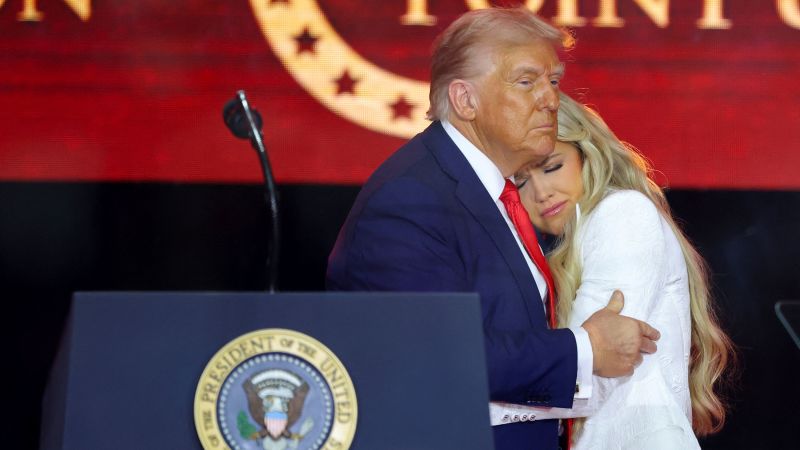
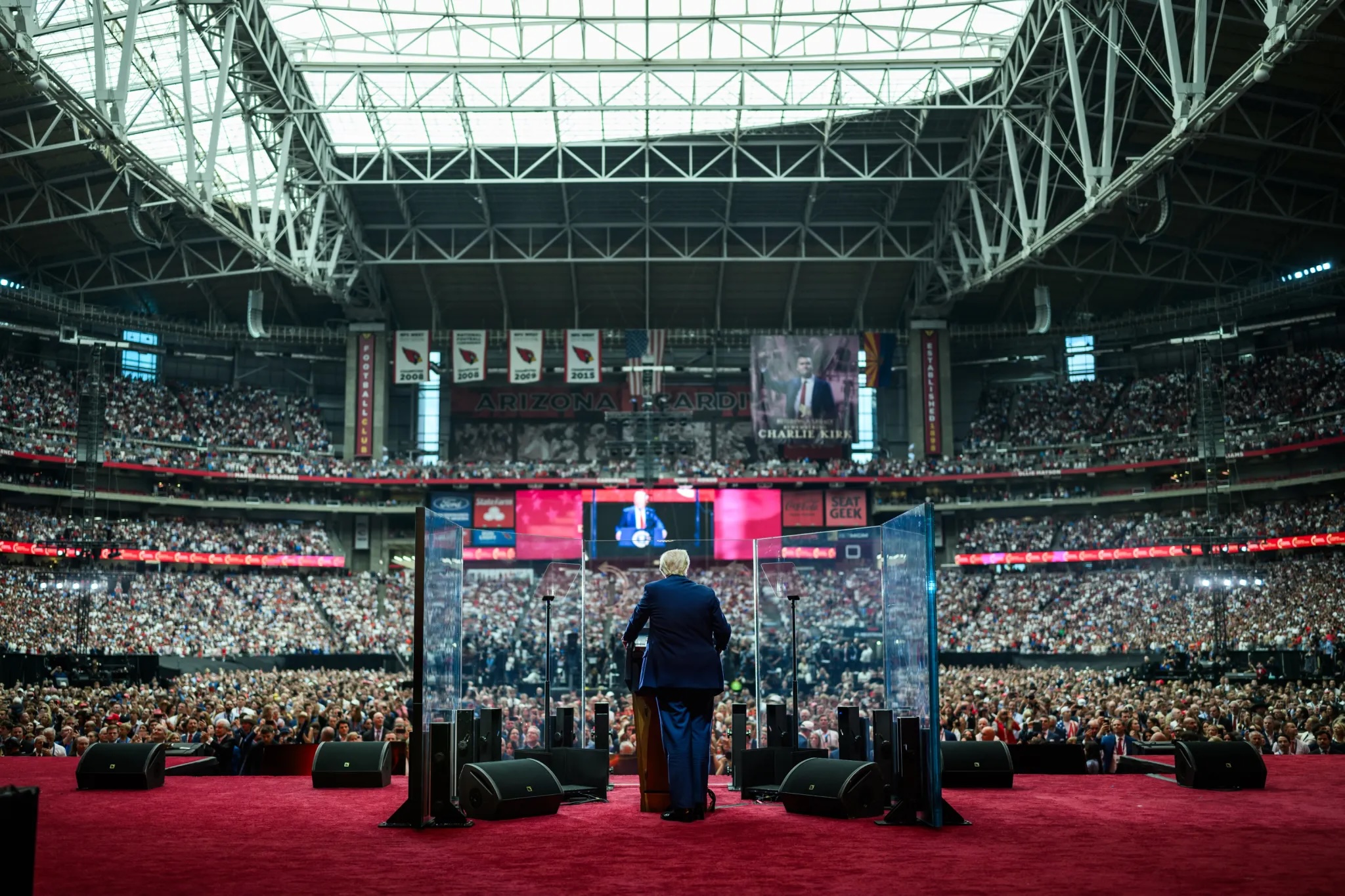
Charlie Kirk’s funeral, held on September 21, illustrated an anti-democratic vision that some Republicans—including the president—now openly embrace. Erika Kirk, widow of the ultra-conservative influencer, took the stage to declare that she forgave the alleged killer of her husband. Donald Trump, however, struck a radically different tone: “I hate my opponents, and I don’t wish the best for them,” he told a grieving Republican audience. A chilling message, revealing his view of politics: the opponent is not a rival, but an enemy to be destroyed, symbolically or otherwise.
Faced with such rhetoric, it is fair, as Pierre Valentin reminds us, to unequivocally condemn all political assassinations and any rejoicing at the death of an adversary. But his reasoning, by exclusively targeting the left and to a fair degree manipulating the numbers, presents a caricatured vision.
The reality is far more worrying: on both sides, justifications for violence exist, fueling a climate in which the adversary is reduced to the status of enemy. American democracy weakens as a logic of vengeance takes hold, with dialogue giving way to radical polarization.